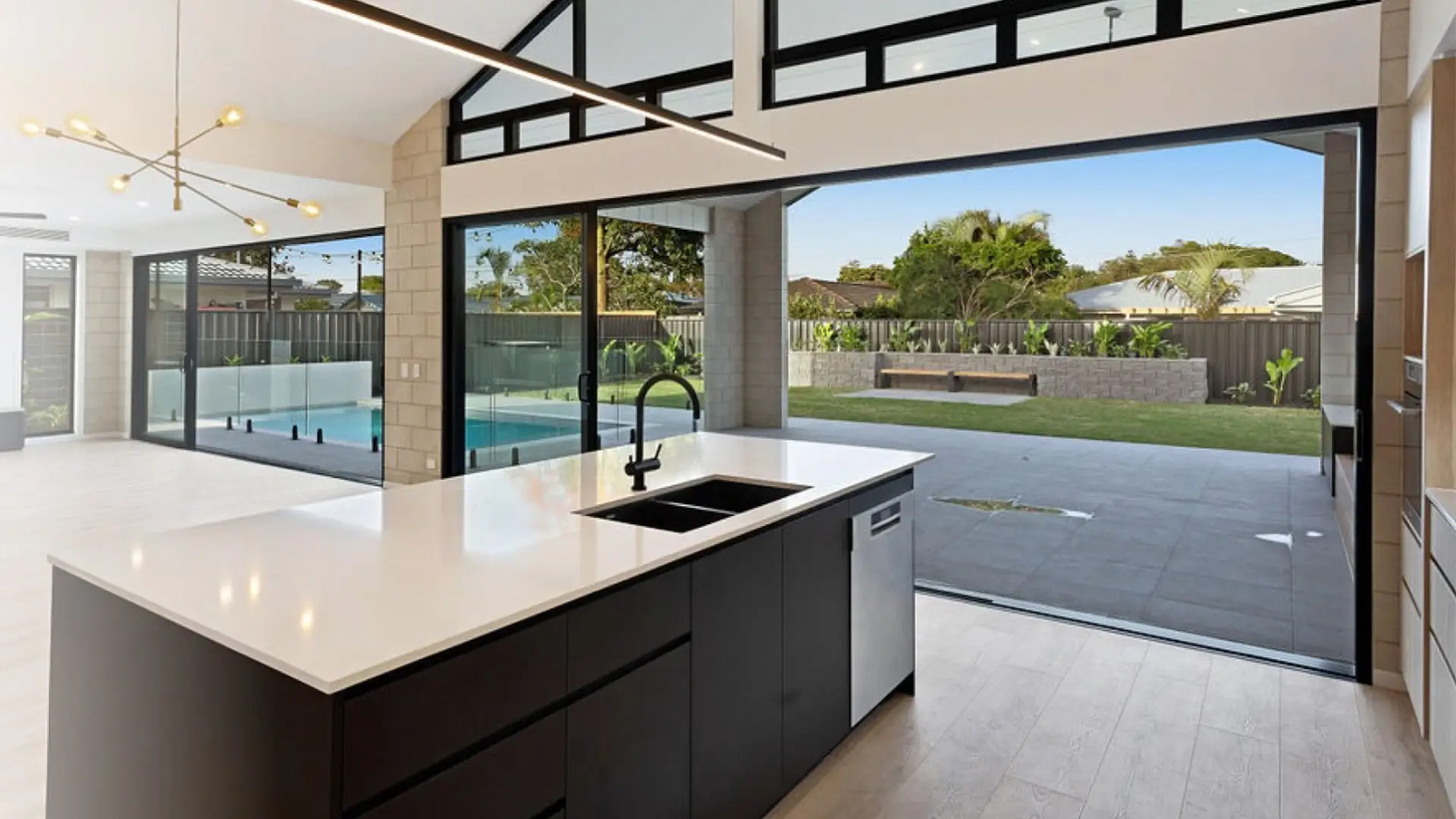
Porcelain has become one of the most asked-about benchtop materials in Australian homes. It comes in large, thin slabs, it shrugs off heat and stains, and it works outdoors as well as in the kitchen.
Here is what to know before you choose a porcelain benchtop.
What is a porcelain benchtop?
Porcelain benchtops are made from natural minerals that are pressed and fired at very high temperatures. The result is a dense, hard surface in large slabs, often around 3200 x 1600 mm.
Brands such as Caesarstone Porcelain and Stone Ambassador’s Vasari range offer porcelain in marble-look, concrete-look and plain finishes.
What porcelain looks like
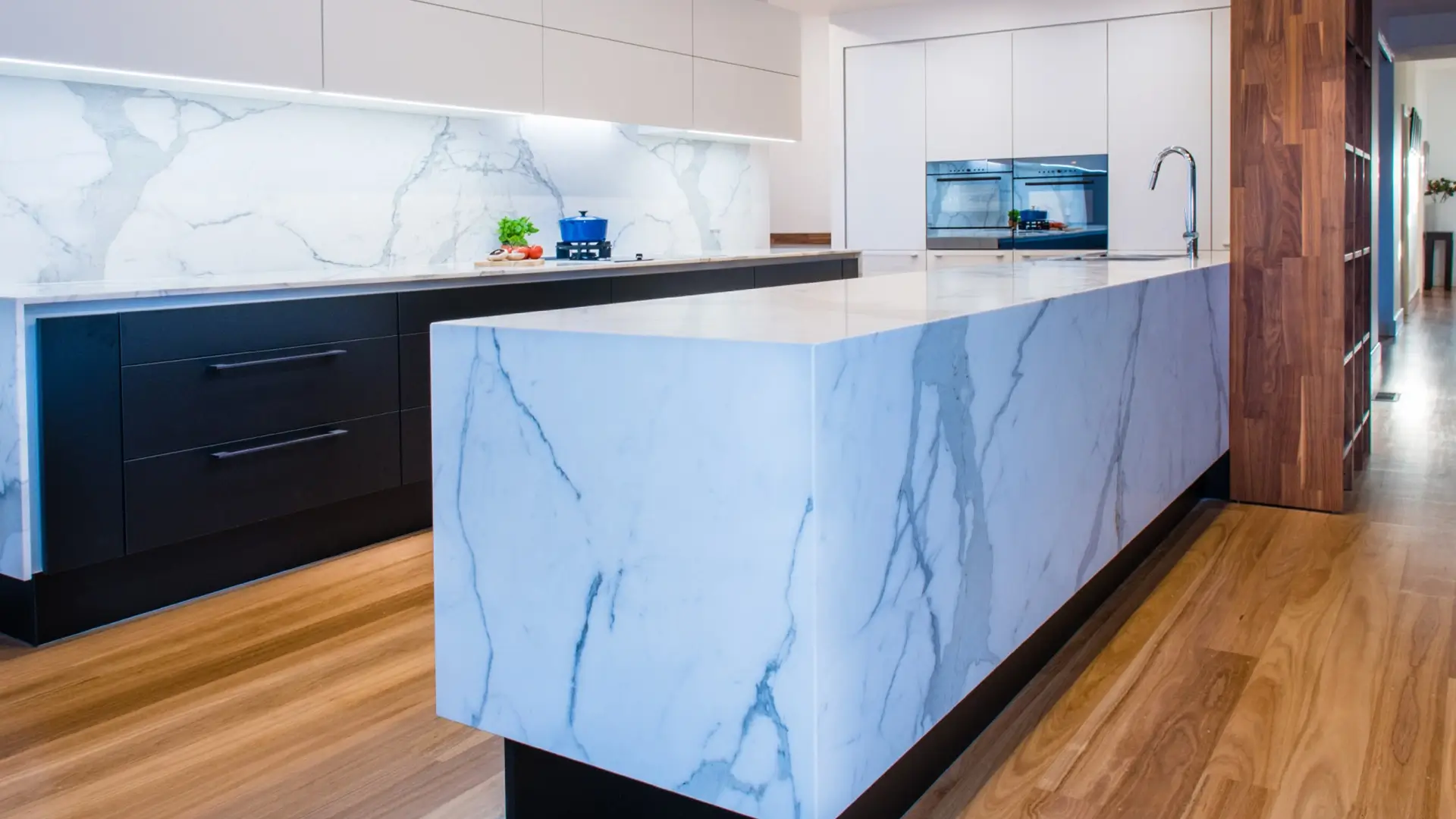
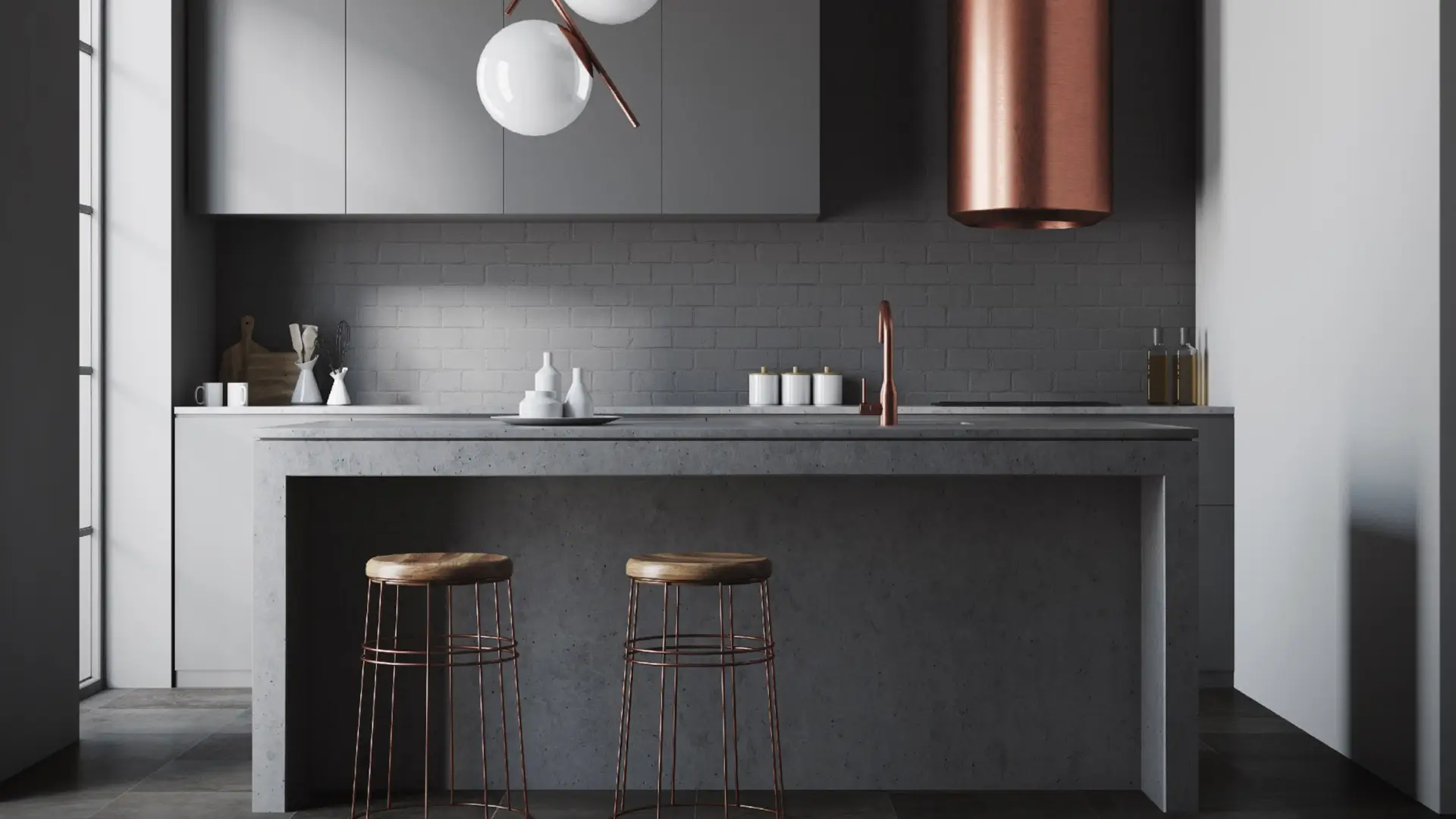
Most porcelain patterns are printed onto the face of the slab. That means you can get a consistent marble or concrete look, with the same pattern repeating across a long run or a large island.
As the pattern sits on the surface, the edge of the slab can look different to the top. This is why porcelain benchtops are often finished with a mitred edge, which carries the pattern around the corner. Ask to see an edge sample before you choose.
Thickness and slab size
Porcelain slabs are thinner than most stone. 12 mm is the most common thickness for benchtops, with thinner options for splashbacks and wall panels.
A thin slab gives a sleek, modern look. If you prefer a heavier look, a mitred edge or apron makes the benchtop appear thicker. The large slab size means fewer joins on long benches and islands.
How porcelain performs
- Heat: porcelain handles heat well. Still use a trivet or mat for hot pans and appliances that sit on the bench for a long time, such as slow cookers.
- Stains: the surface is non-porous, so spills wipe off and it does not need sealing.
- Sunlight: porcelain is UV stable, so it suits outdoor kitchens and barbecue areas.
- Impact: it is hard but can chip if a heavy object hits an edge. Small chips can usually be repaired.
Cleaning porcelain
Wipe with warm water and a mild detergent, then dry. Avoid abrasive pads and harsh chemicals. Follow the care guide from your porcelain supplier, and see our Care and Warranty page for general benchtop care.
Porcelain vs Mineral Stone and natural stone
- Choose porcelain for a thin, modern profile, outdoor use, or a large island with few joins.
- Choose Mineral Stone for a thicker benchtop with pattern through the body of the slab and a wide range of edge profiles.
- Choose natural stone for a one-of-a-kind slab. Read Mineral Stone vs natural stone to compare.
Cost
Porcelain prices vary by brand, range and finish. Fabrication plays a part too: mitred edges, cut-outs and the care needed to cut thin slabs all add time. Read what sets the cost of a stone benchtop for the full list of factors.
Is porcelain right for you?
Porcelain suits homeowners who want a modern, low-maintenance surface, especially for long benches, islands and outdoor kitchens. Tell us about your project and the look you like, and we will let you know which porcelain ranges suit it.
We make and install porcelain and stone benchtops across the Gold Coast and Brisbane. Request a quote or call us on 07 5598 1918.