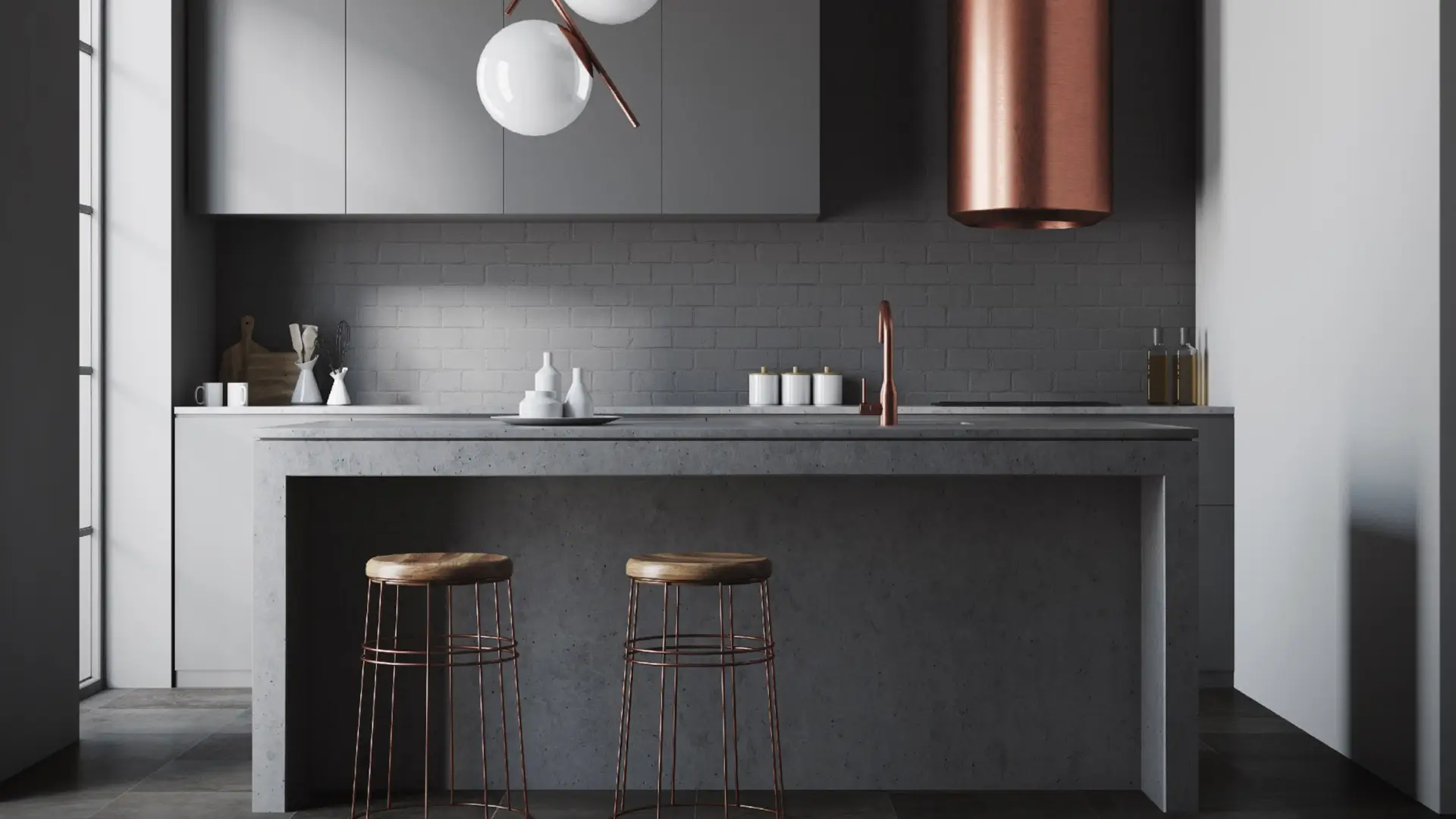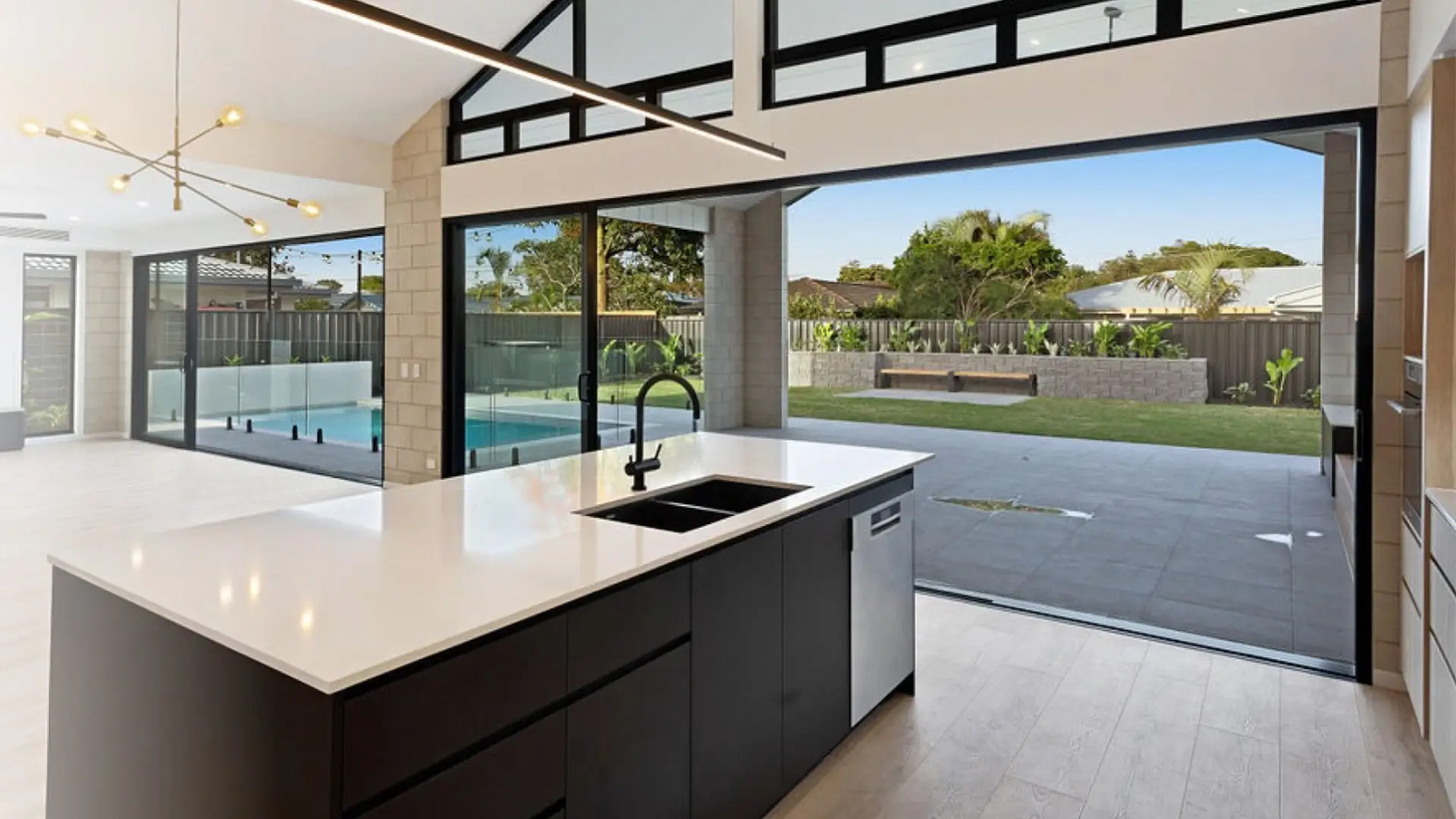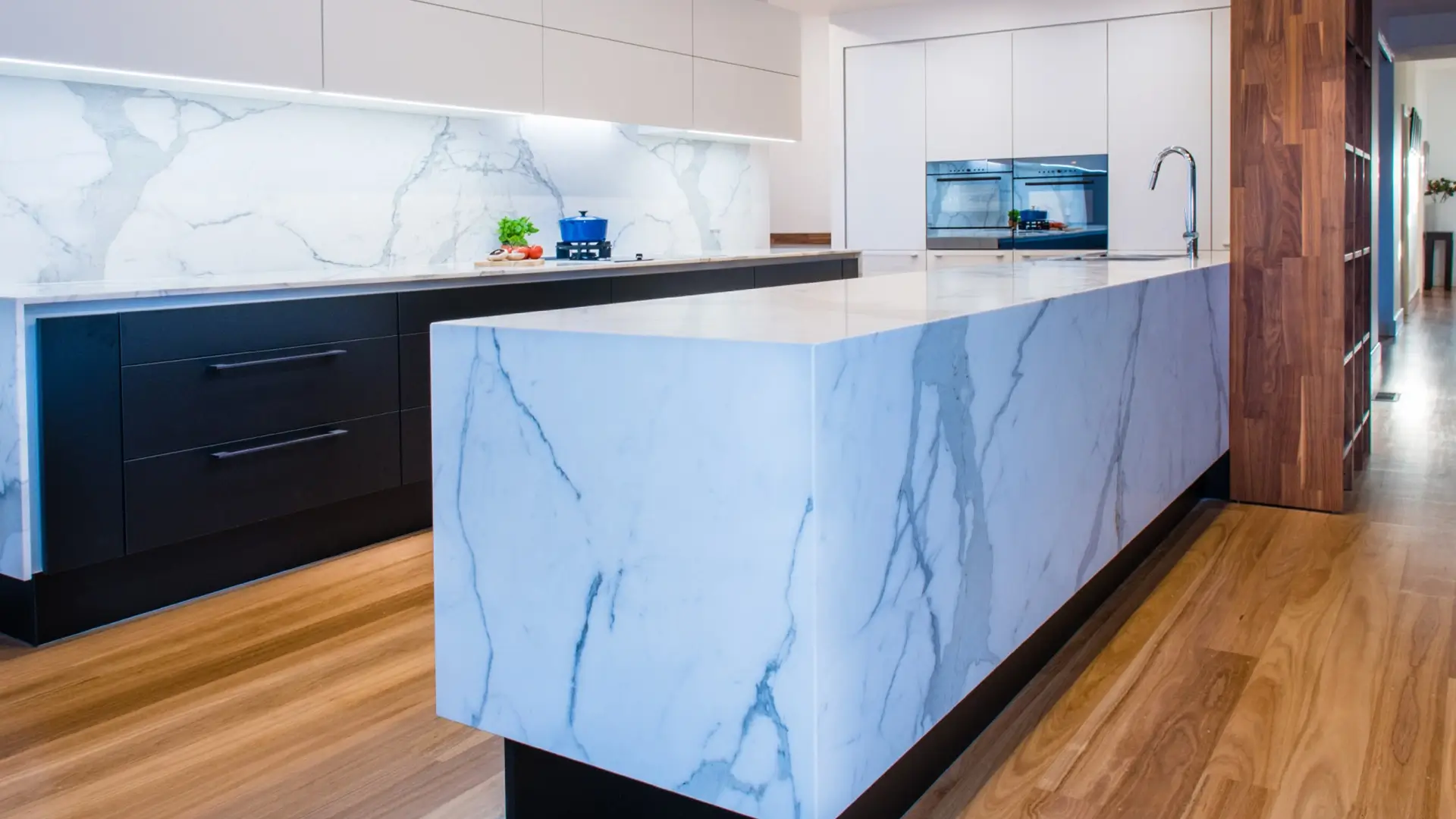
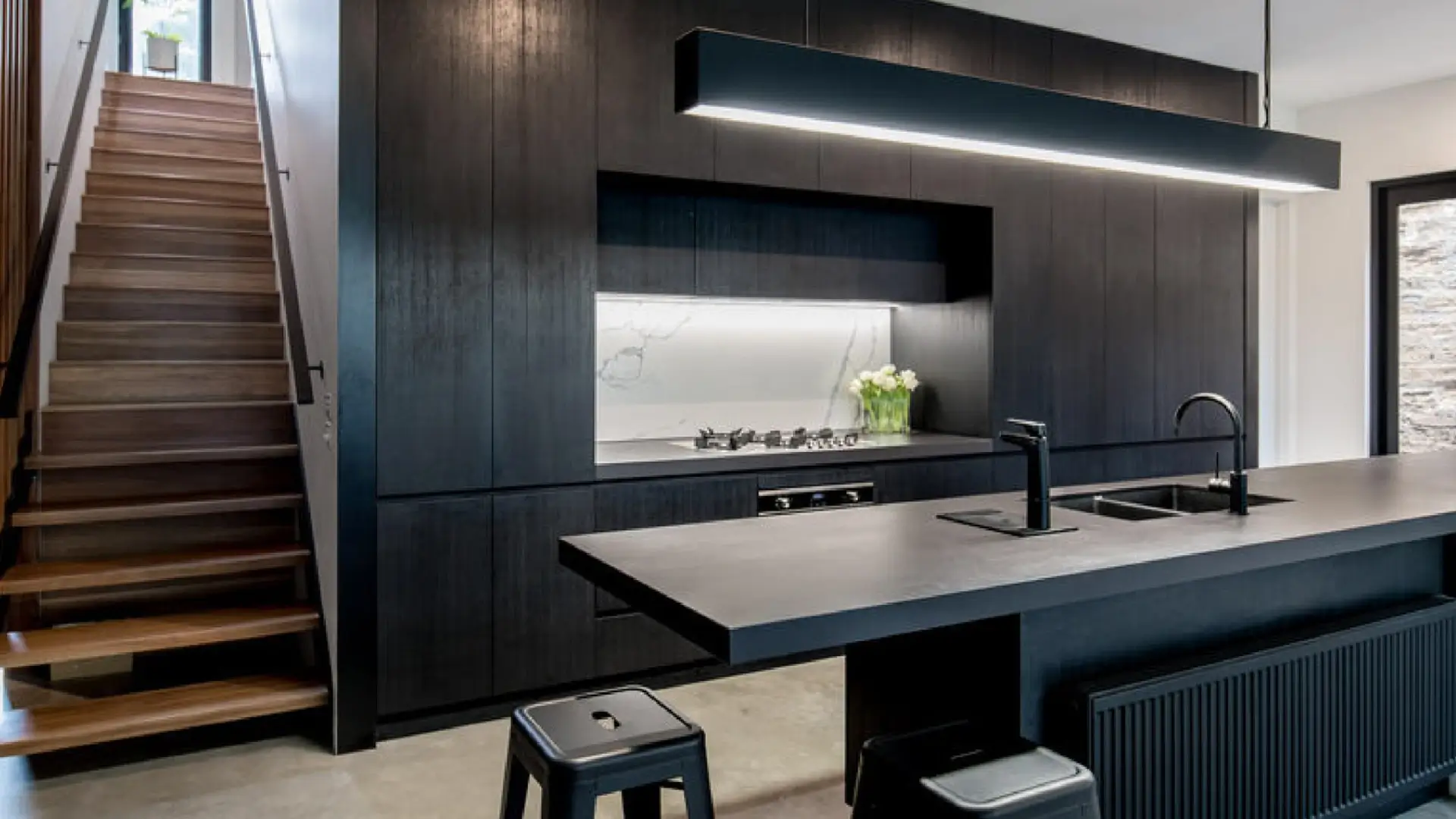
Granite has been a favourite benchtop stone in Australian homes for decades. It is a natural stone, quarried in slabs, and no two pieces are the same.
Here is what to know before you choose granite for your kitchen, bathroom or laundry.
What granite looks like
Granite has a speckled or flecked pattern made by the minerals in the stone. Colours range from light greys and creams to deep charcoals and blacks.
The pattern hides crumbs and everyday marks well, which makes it a practical choice for busy family kitchens.
How granite performs
Granite is a dense, hard natural stone. It handles the daily use of a kitchen well: hot pans, chopping prep and spills, as long as spills are wiped up and the stone is sealed.
Use trivets for very hot cookware and a chopping board for cutting. Cutting straight on the stone will blunt your knives and can mark the surface.
Sealing granite
Granite is porous, so it needs sealing to resist stains. Reseal it every 6 months in the first year, then once a year after that. A simple test: if water no longer beads on the surface, it is time to reseal.
Cleaning granite
- Wipe with warm water and a little mild detergent, then rinse and dry.
- Clean up spills straight away.
- Avoid abrasive cleaners, scourers and harsh acid or alkaline products.
Full instructions are on our Care and Warranty page.
Where granite works best
- Kitchens: perimeter benches, islands and splashbacks.
- Laundries: darker granites hide everyday marks.
- Outdoor kitchens and barbecue areas: ask us which granites suit your space.
Choosing your granite slab
As granite is natural, the sample shows the type of stone, not your exact slab. Colour and pattern vary between slabs. If the look matters to you, ask to view the material before it is cut.
Comparing granite with other options? Read Mineral Stone vs natural stone or marble benchtops.
We make and install granite benchtops for kitchens, bathrooms and laundries across the Gold Coast and Brisbane. Request a quote.